Mudjacking or foam?
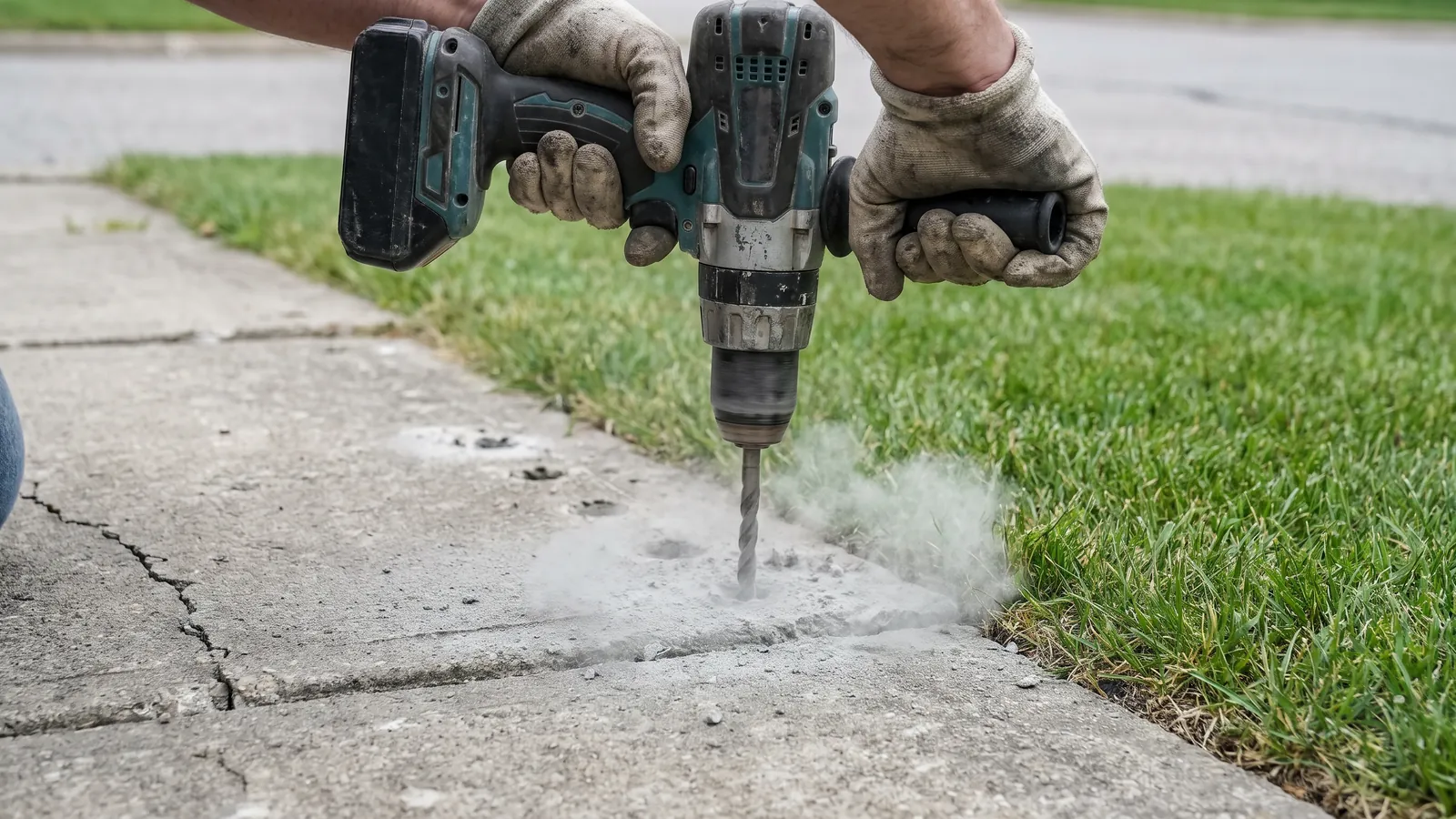
Both lift the same way: holes are drilled through the slab, material is pumped into the void beneath, and the slab rises as the void fills.
| Mudjacking | Polyjacking (foam) | |
|---|---|---|
| Material | Cement and soil slurry | Expanding polyurethane foam |
| Hole size | Larger, about an inch and a half | Smaller, about the width of a pencil to a dime |
| Weight under the slab | Heavy | Light, adds little load to soft soil |
| Ready to use | After the slurry sets, often a day | Usually within the hour |
| Cost | Usually lower | Usually higher |
Why it matters near the foundation
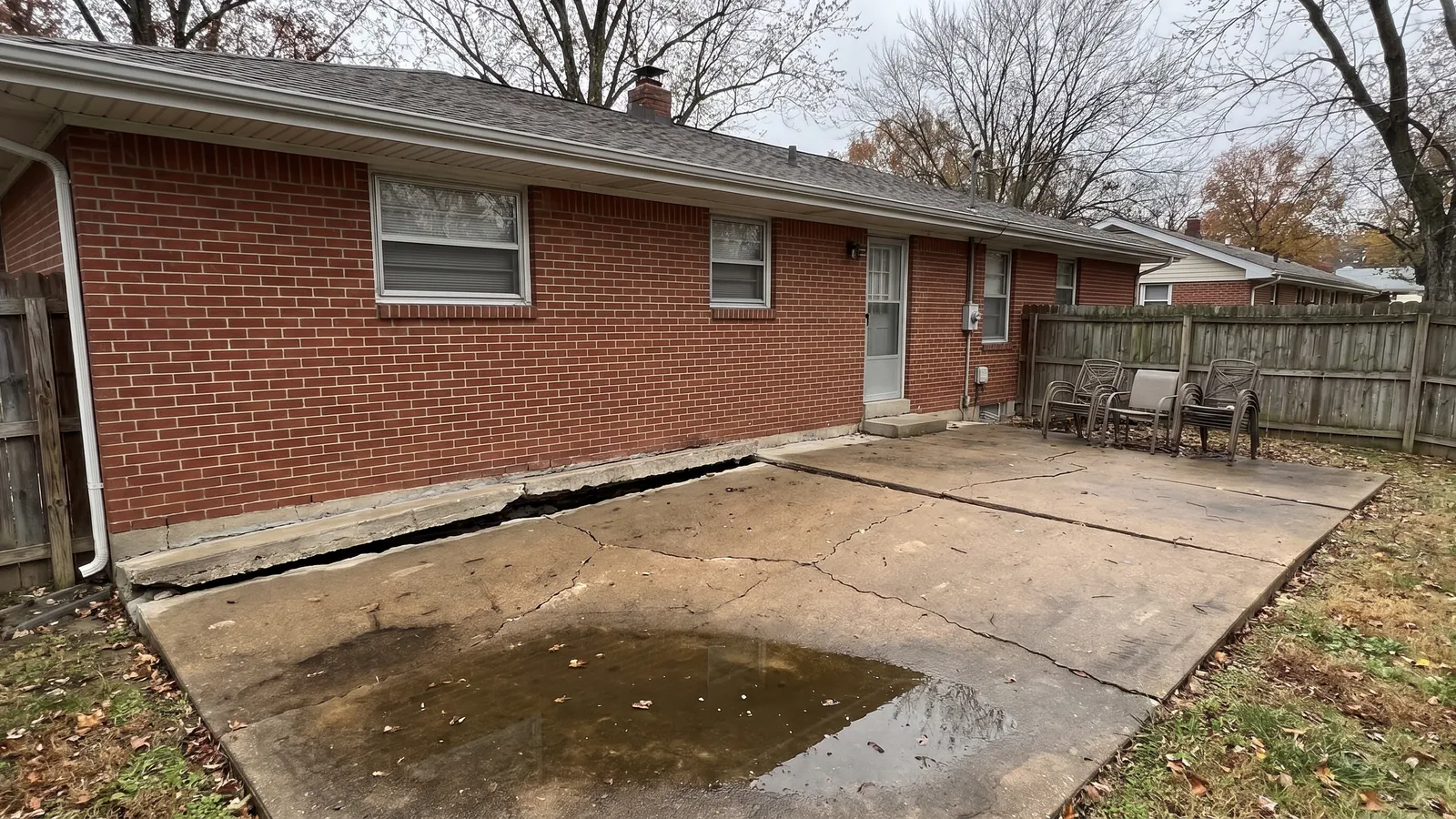
A patio or walk that tips toward the house sends every rain straight at the basement wall. That is how a sunken slab becomes a wet basement. Raising it so water runs away, then sealing the joint against the house, is one of the cheapest waterproofing fixes there is.
When leveling is not the answer
Slabs that are broken into many pieces, crumbling on the surface or heaved up by tree roots are usually better replaced. We say so rather than lift something that will not hold. Garage floors and basement slabs can sometimes be lifted too; that is checked case by case.
Questions we hear about concrete leveling
How long will a leveled slab stay up?
That depends on why it sank. If water was washing out the soil, the joints and drainage have to be fixed as well, or it can sink again.
Will the patched holes show?
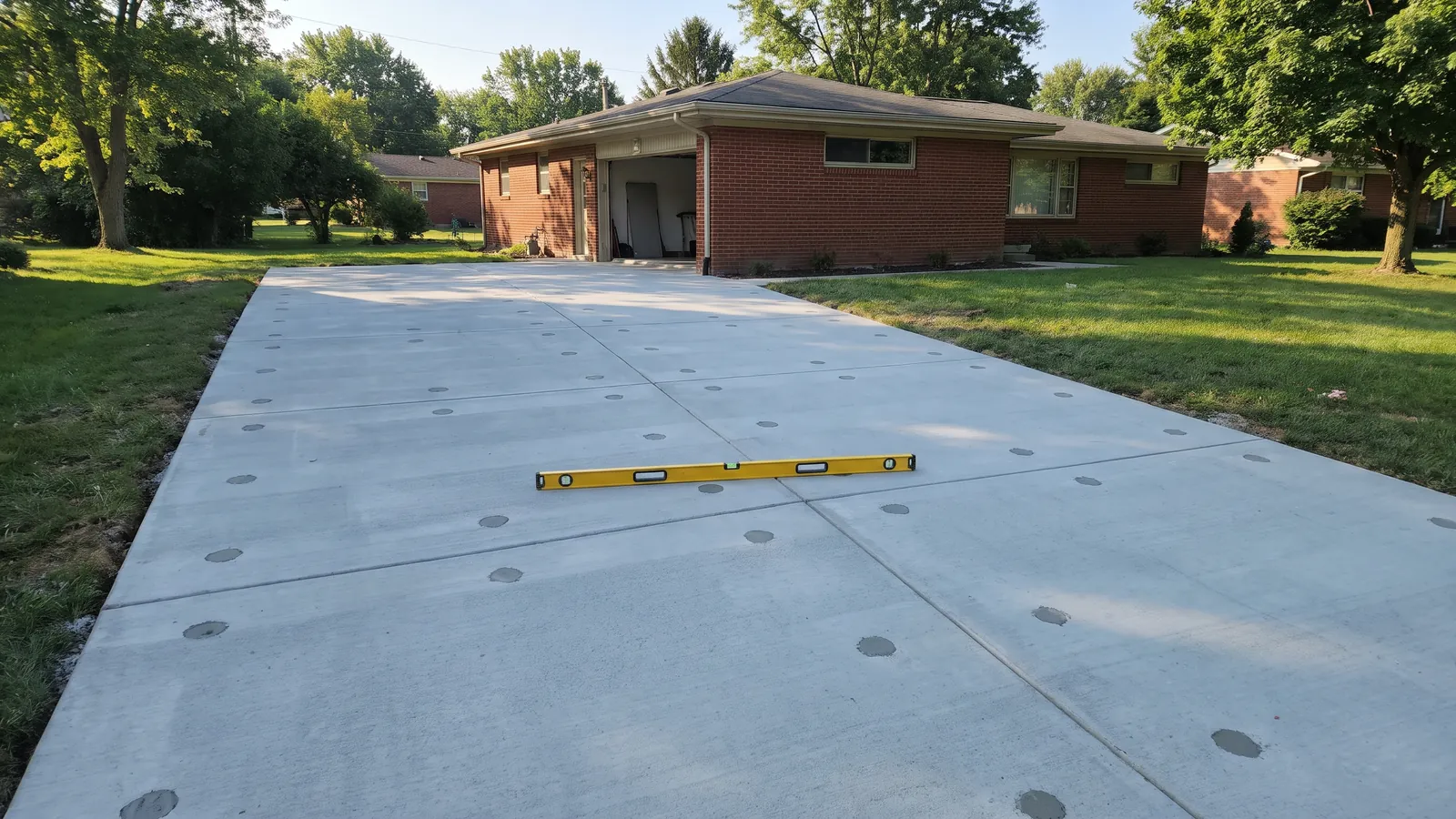
They are visible up close as small gray circles. We match the patch color as well as possible.
Can you level front steps?
Often, yes, if the steps are one solid piece. Steps that have separated from the porch may need a different fix.