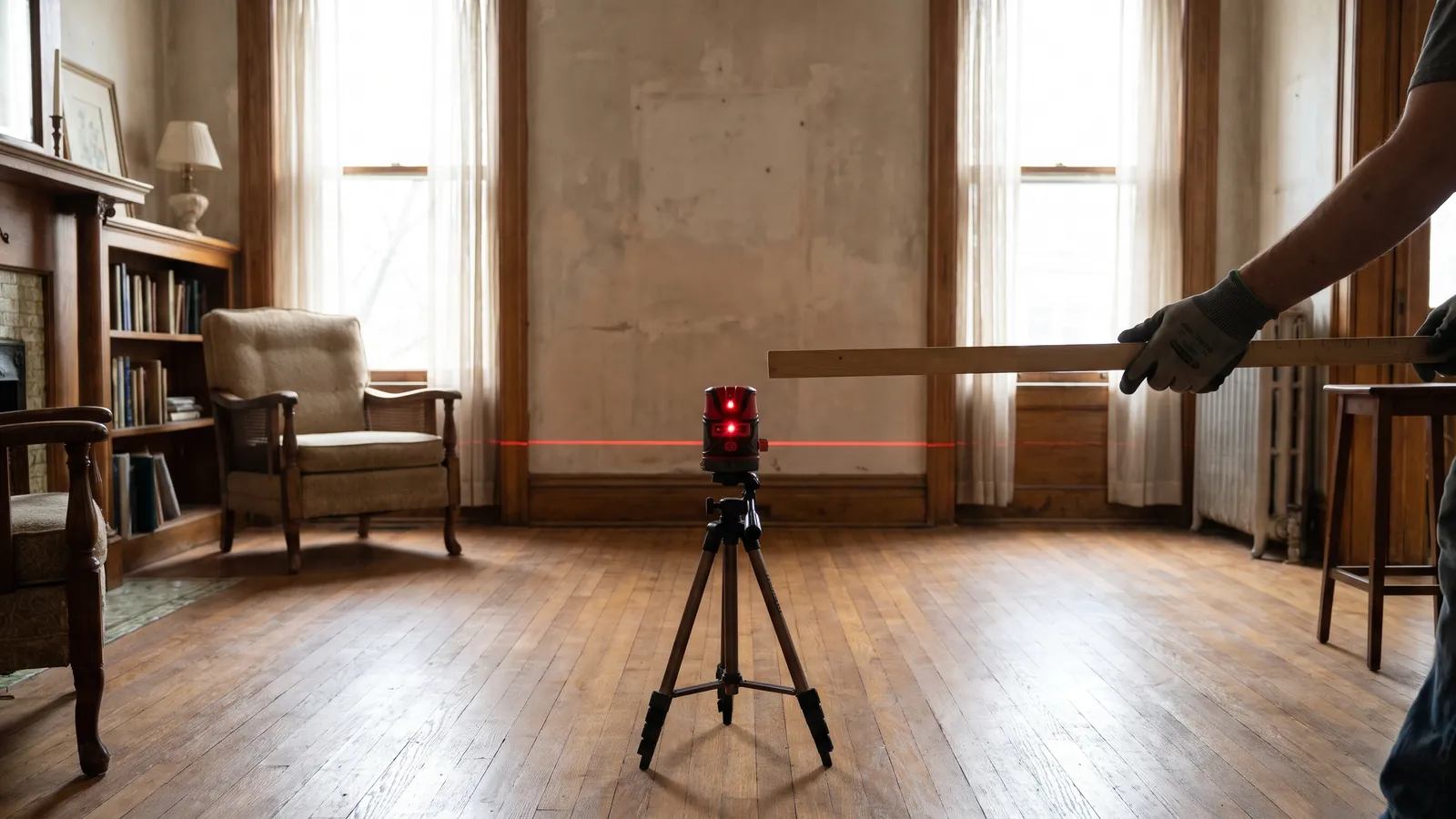
What we check
| Area | What we look at |
|---|---|
| Floors | Laser readings across each level to map high and low spots |
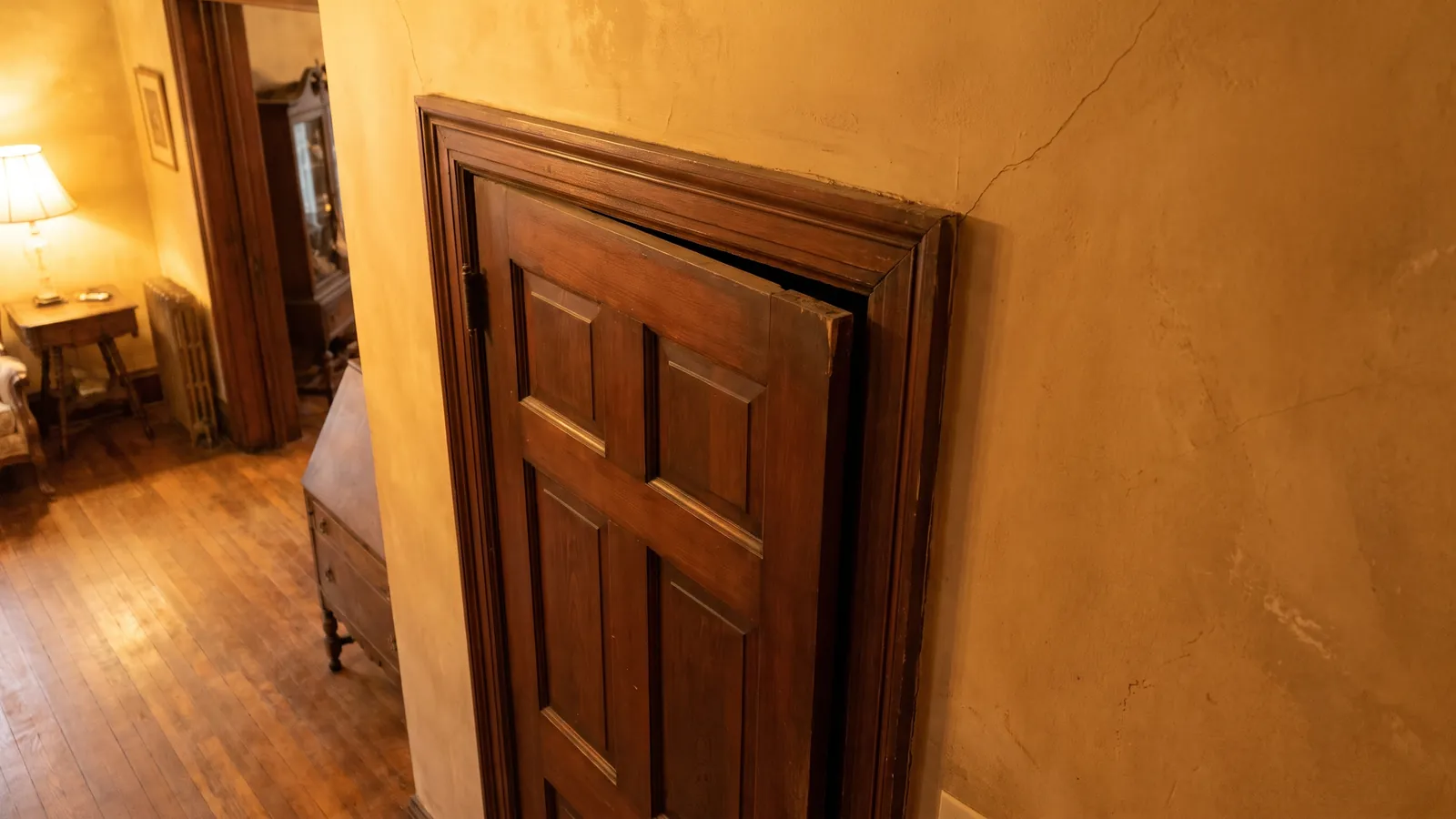
| Walls inside | Plaster and drywall cracks, door and window frames, gaps at trim |
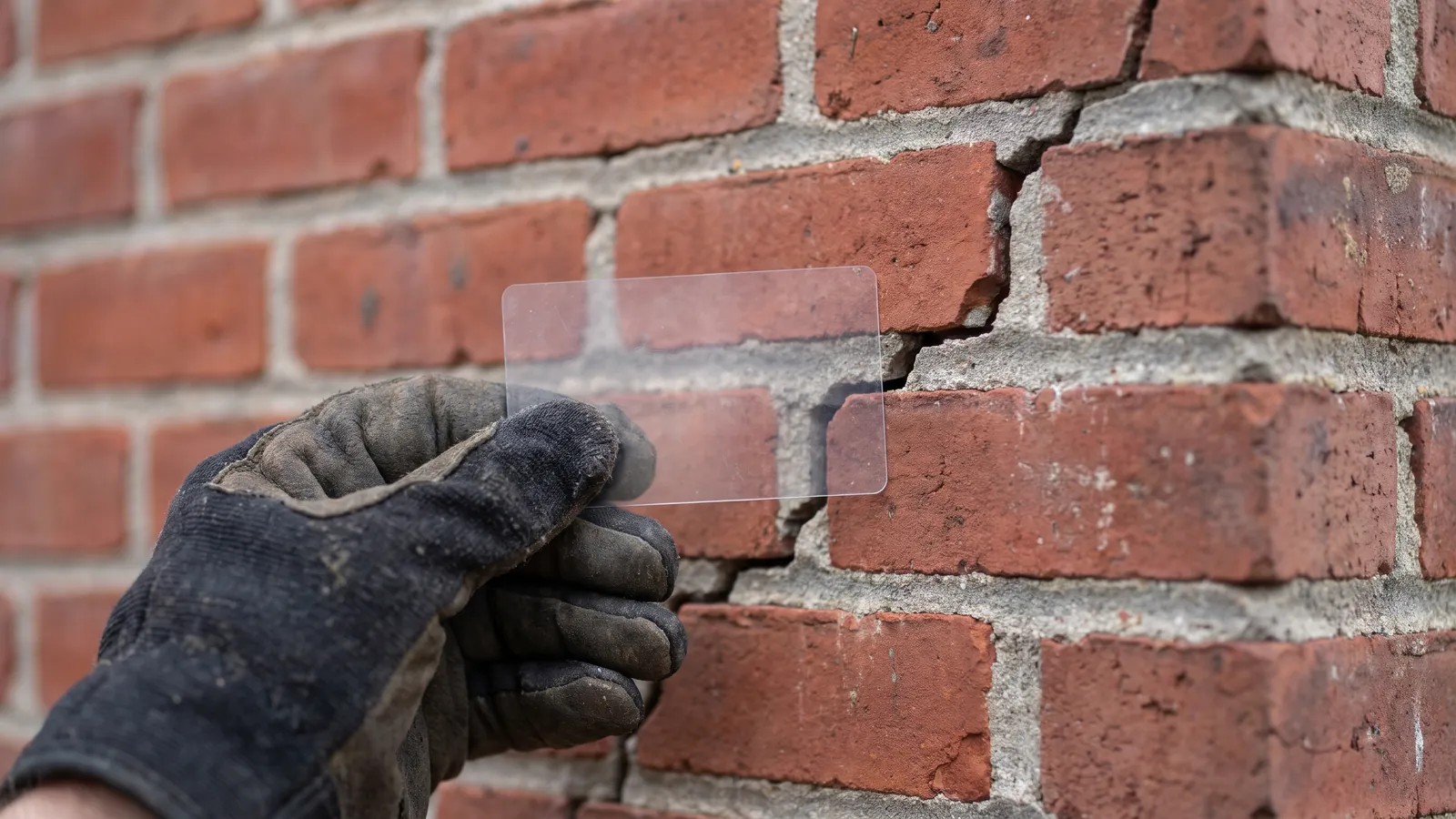
| Basement walls | Crack type and width, lean measured top to bottom, signs of water |
| Outside | Brick and block cracks, gaps at chimneys and porches, foundation wall exposed above grade |
| Water | Gutters, downspouts, grade, window wells, sump pump if there is one |
| Crawl space | Moisture, supports, beams and insulation |
What you get afterward
A written plan in plain words: what we found, the likely cause, whether it needs work now, later or not at all, and the price of anything we recommend. If the right answer is a structural engineer's report, for a sale or a complicated case, we tell you that too.
Good times to book one
- Before you buy an older house, or when a buyer's inspector flags the foundation
- After a very wet season or a long dry spell, when cracks often change
- When a door suddenly starts sticking or a new crack appears
- Before finishing a basement
Questions we hear about foundation inspection
Is the inspection really free?
Yes. No charge for the visit, the measurements or the written plan, and no obligation to book any work.
How long does it take?
Usually about an hour, longer for large homes or houses with a crawl space and a basement.
Is this the same as a structural engineer's report?
No. It is a contractor's inspection. Some sales, lenders and complex cases need an engineer's report, and we will tell you when yours does.