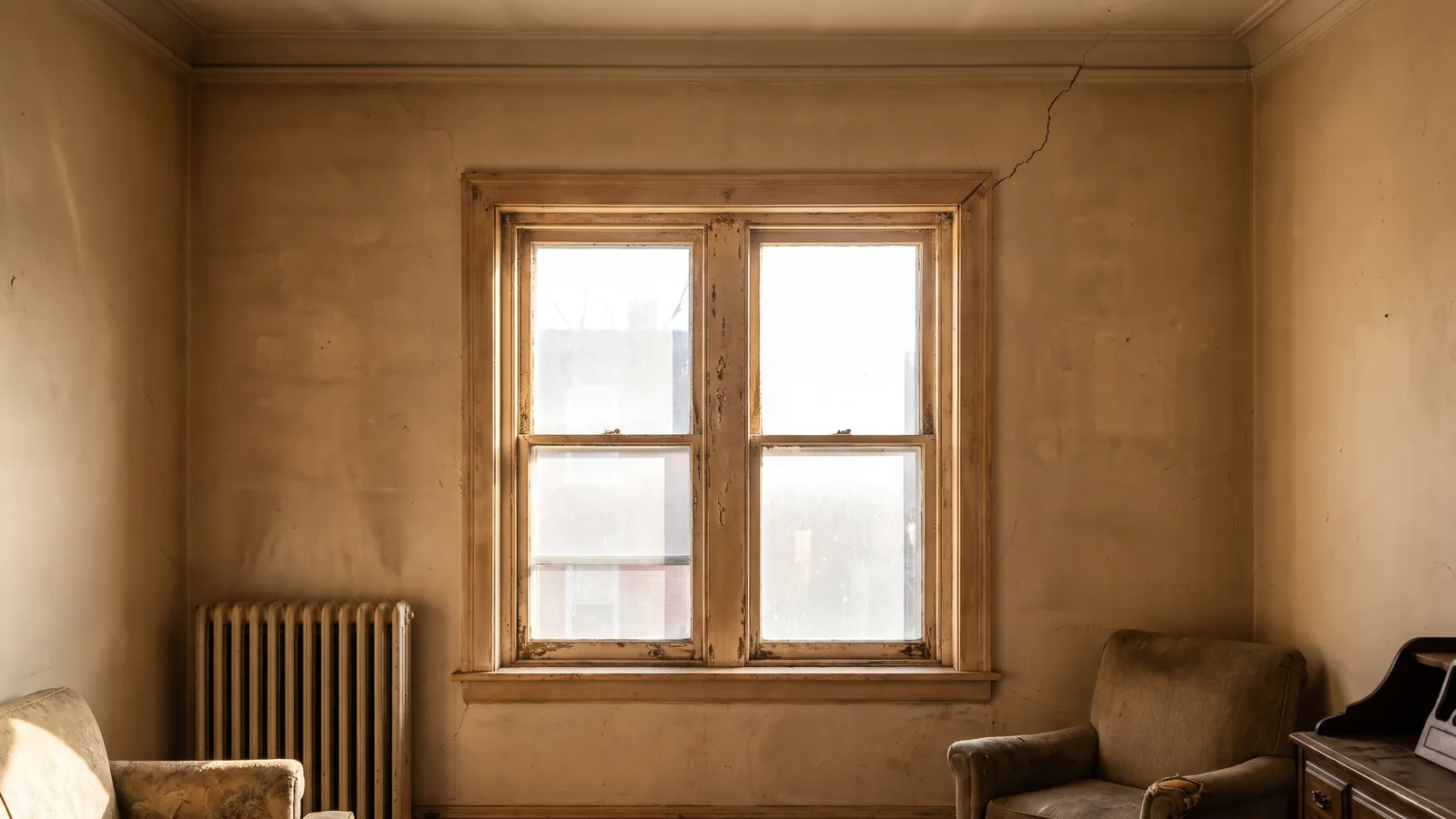
Usually harmless
- Hairline vertical cracks in a poured basement wall that have not changed width
- Small cracks at the corners of drywall seams in a newer house
- Thin surface cracks in a garage or basement floor slab
Worth an inspection
- Stair-step cracks in brick or block, especially from a corner or a window
- Cracks wider at one end than the other
- A horizontal crack across a basement wall, or a wall leaning in at the top
- Doors that start sticking, or gaps above door frames shaped like a wedge
- Floors you can feel slope, or a marble that always rolls the same way
- A chimney, porch or step pulling away from the house
- Water at the joint where the basement wall meets the floor
How to watch a crack
Draw a pencil line across each end of the crack and write the date. Take a photo with a coin or ruler beside it. Look again after the next wet month and the next dry one. Cracks in St. Louis clay often open in late summer and close a little in spring; one that keeps growing past its marks through both seasons is active.
Why the seasons matter here
The clay under the region swells with water and shrinks as it dries. A crack that opens every August and closes every April is telling you the house rides that cycle. That does not always mean piers. Sometimes steady drainage and moisture around the house is enough. An inspection tells you which.
Quick answers
Should I worry about a crack in a new house?
Small shrinkage cracks in the first years are common. Cracks that grow, or stair-step cracks in masonry, are worth a look.
Can I sell a house with foundation problems?
Yes, but Missouri sellers are generally expected to disclose known defects. A repair with paperwork is often easier to sell than an open question.
When should I call right away?
When a wall moves visibly, a crack opens suddenly with doors jamming, or water pours in. See the emergency guide.