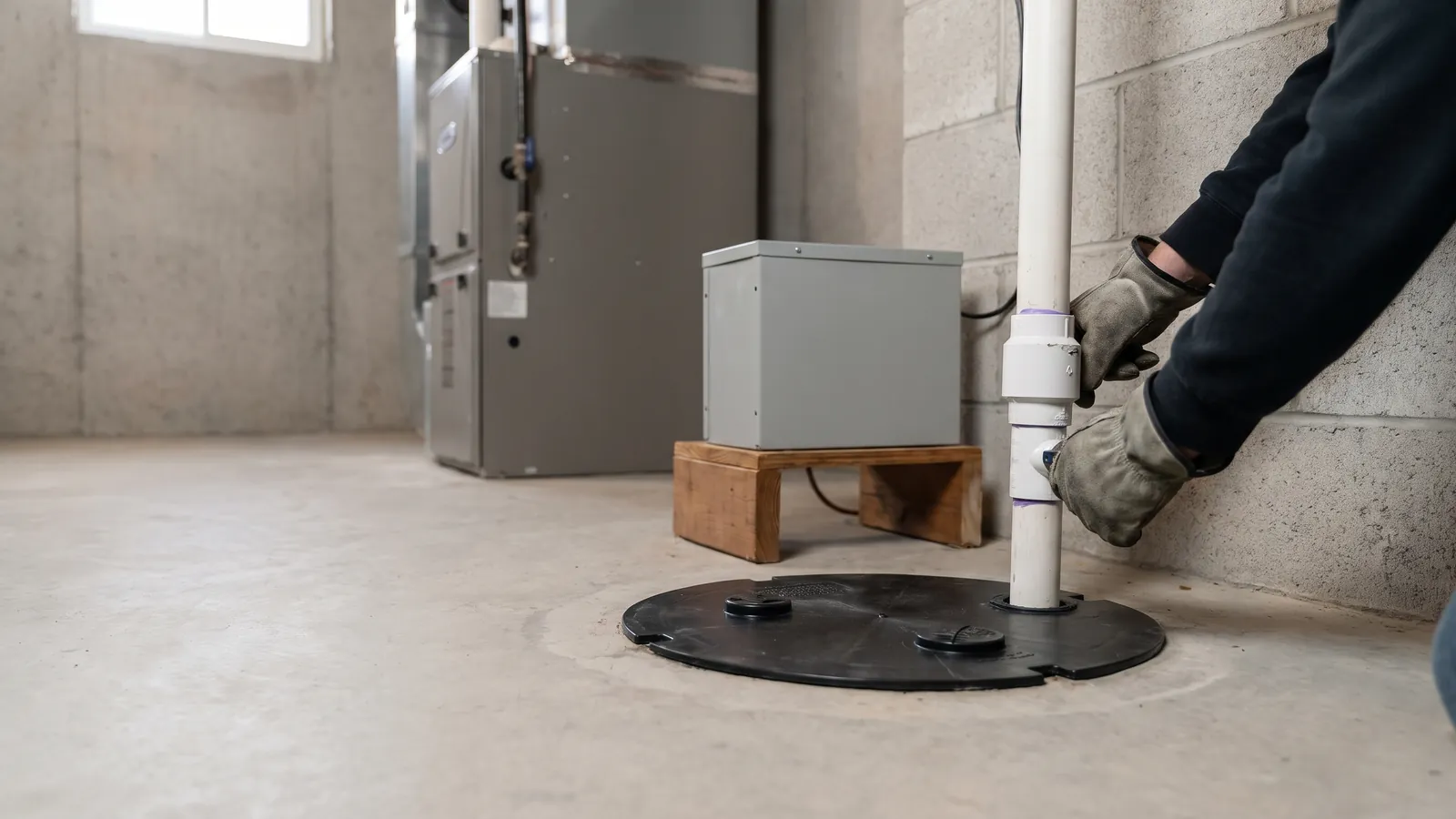
What a good sump setup has
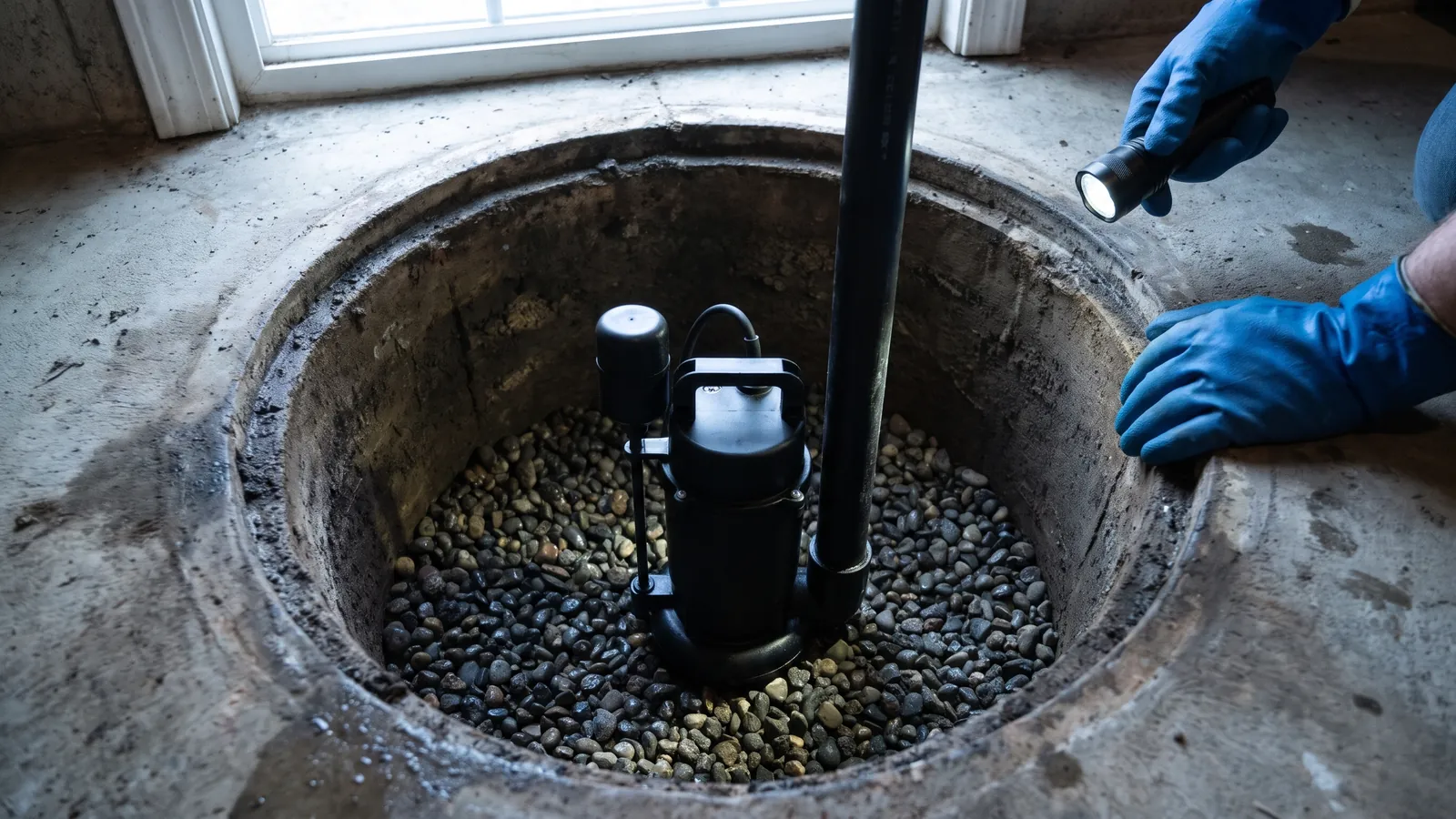
- A lined pit set low enough to collect water from the drain tile or the soil under the floor
- A submersible pump sized for how much water the basement actually sees
- A check valve so water in the line does not run back into the pit
- A sealed lid to keep out debris and basement humidity
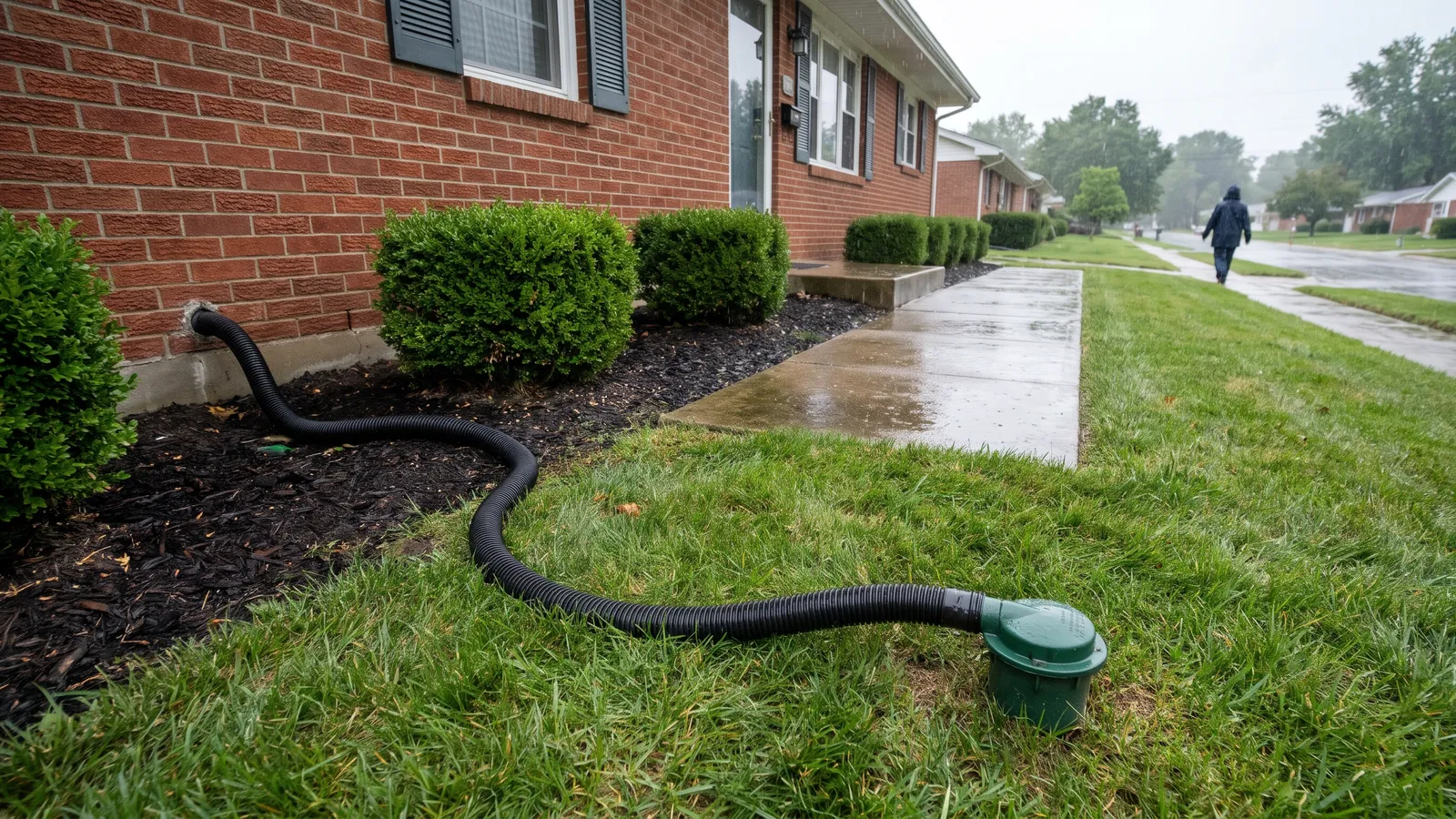
- A discharge line that ends well away from the house, not at the foundation where the water soaks straight back in
- A battery backup pump, or at least a high-water alarm
Why the backup matters here
The storms that drop the most rain on St. Louis are often the same ones that bring down power lines. A pump without power does nothing. A battery backup runs a second pump for hours when the main one stops, and a water alarm tells you before the floor is wet.
Replacing an old pump
Pumps wear out, floats stick and switches fail. If your pump runs constantly, short-cycles, hums without moving water or is more than several years old, it is worth a look. A swap is usually a short visit; we check the pit, the valve and the line at the same time.
Questions we hear about sump pump installation
How long does a sump pump last?
It varies with how often it runs. Many homeowners plan to replace the pump every several years, sooner if it runs a lot.
Do I need a sump pump if my basement is dry?
Not necessarily. Some homes never need one. If the basement only gets damp at the walls, drainage outside may be the better first step.
Can you add a backup to my existing pump?
Usually, yes, if the pit has room. We check the pit size and the current pump first.