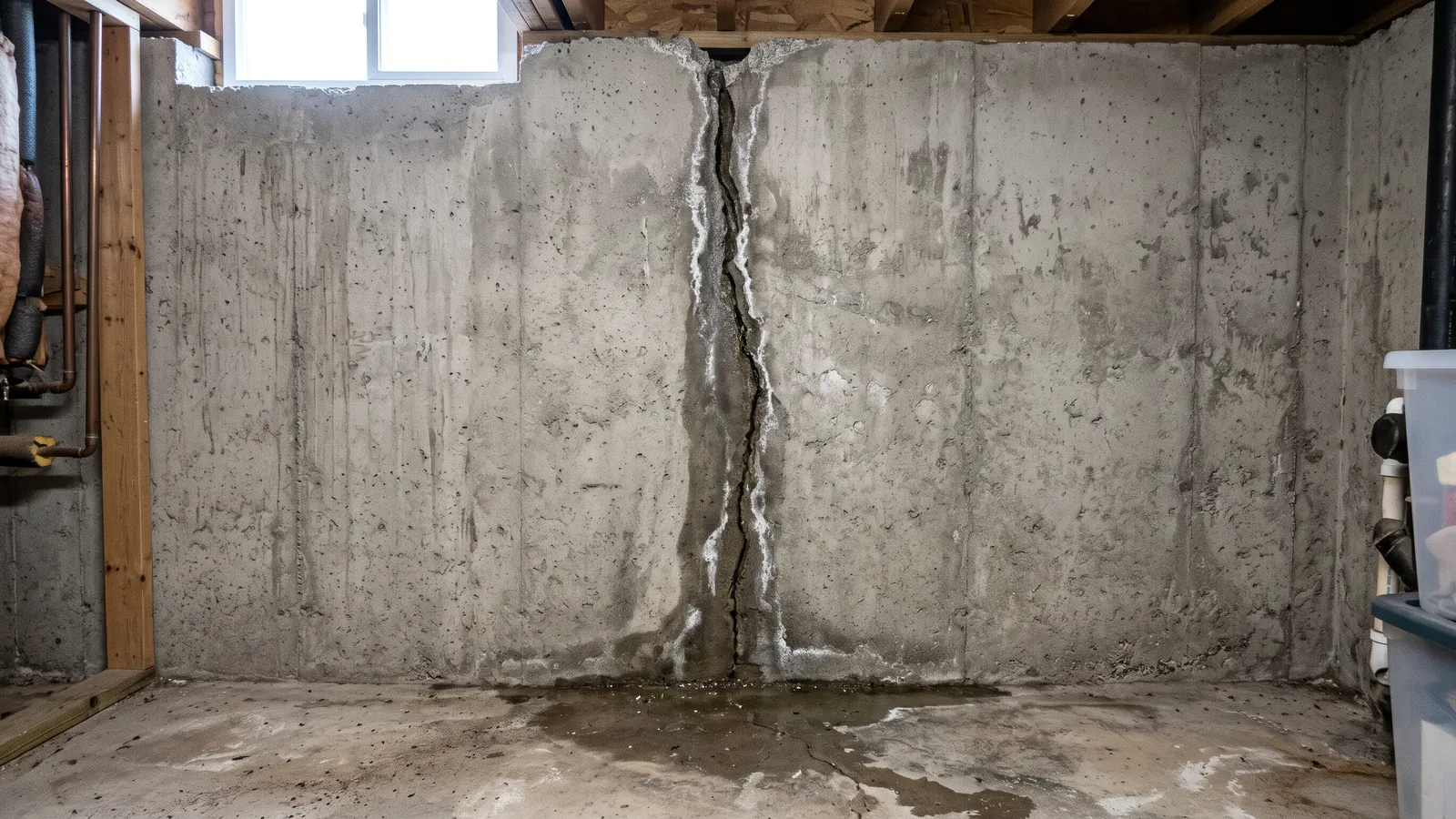
Reading the crack
Cracks tell you a lot by their shape:
- Thin, vertical, even width in a poured wall: usually shrinkage. Worth sealing if it lets water in.
- Wider at the top or the bottom: one part of the wall moving more than the other, often settlement.
- Stair-step in block or brick: a corner or a wall section dropping.
- Horizontal across a block wall: soil pushing the wall in. See bowing wall repair.
How injection works
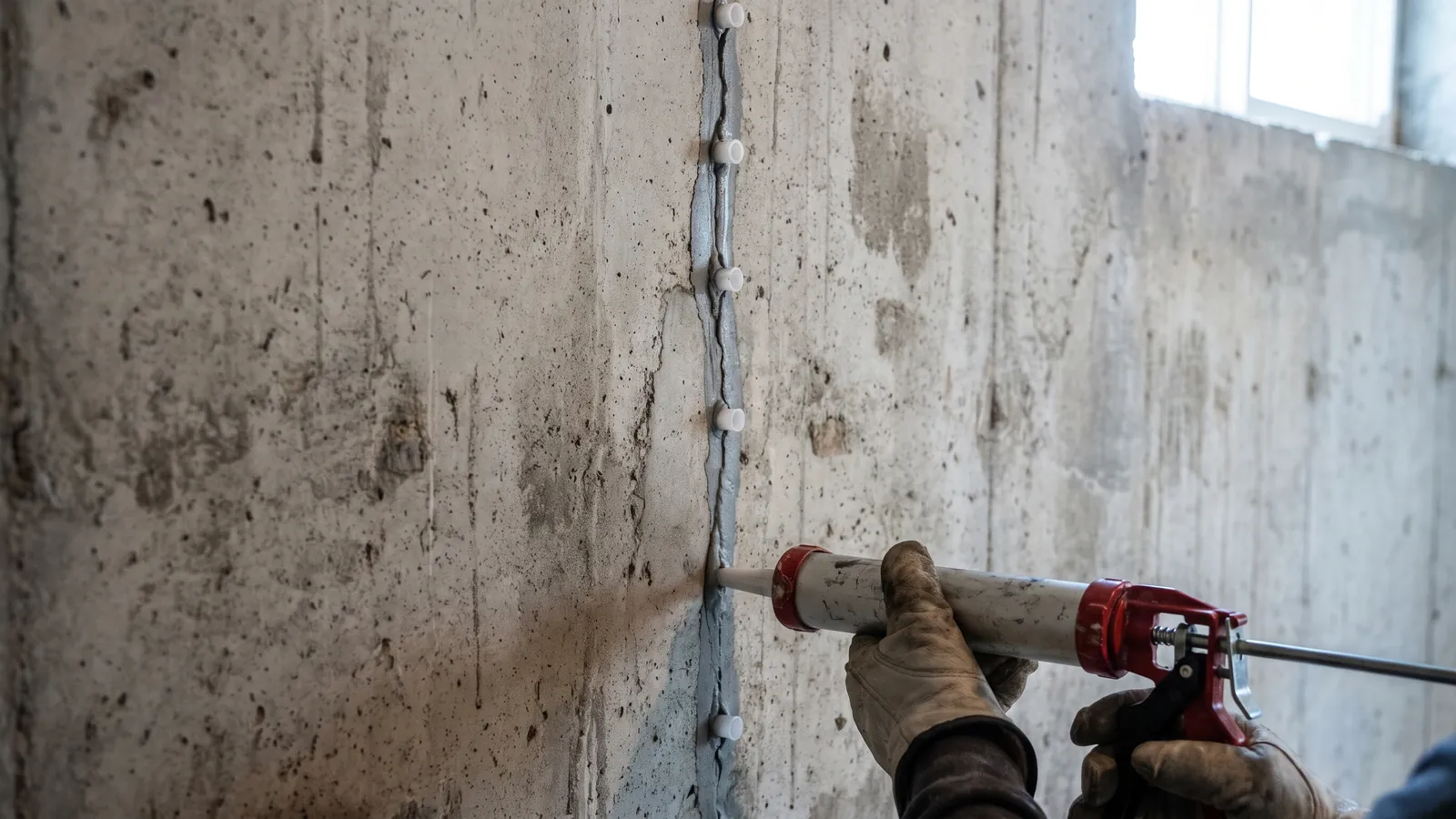
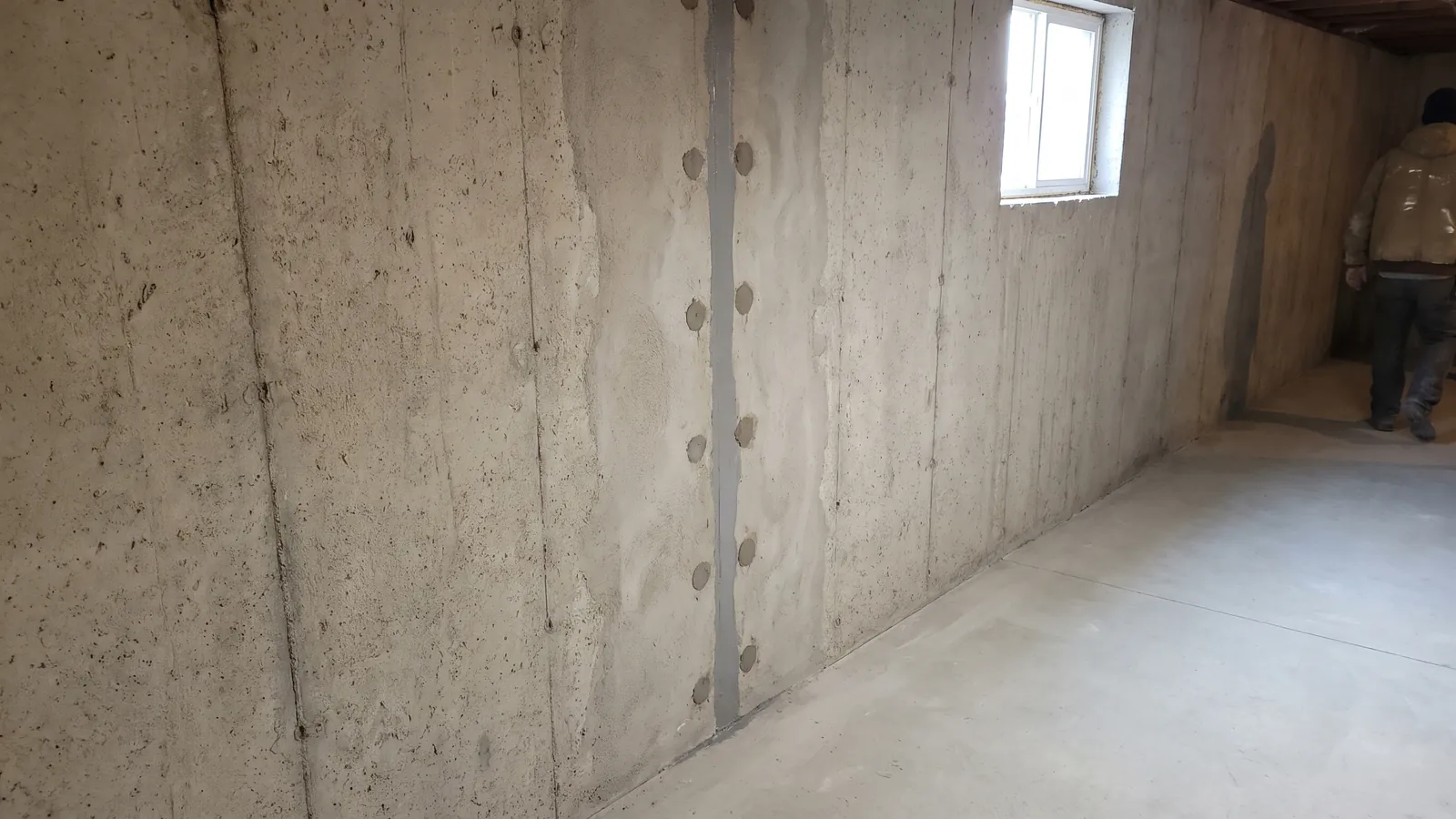
The crack face is cleaned and sealed with a paste, with small ports set along it. Resin is pumped in from the lowest port upward until it shows at the next, so the crack fills from back to front. Polyurethane foam stays a little flexible and is the usual pick to stop water; epoxy cures hard and is used where the wall needs to act as one piece again. Once cured, the ports come off and the face is ground smooth.
Block walls and old stone
Injection is built for poured concrete. Block walls are hollow and stone walls have mortar beds, so leaks there are handled with repointing, interior drainage or exterior work instead. We tell you which kind of wall you have and what actually works on it.
Questions we hear about foundation crack repair
Can I just caulk the crack myself?
A surface caulk may slow a small leak for a while, but water usually finds its way around it. Injection fills the full depth of the crack.
Does a cracked foundation hurt resale?
Buyers' inspectors note cracks. A repair with paperwork, and an engineer's or contractor's explanation of the cause, usually helps more than an unexplained patch.
How long does crack injection take?
Most single cracks are done in a few hours, with a short wait for the resin to cure before the ports are removed.