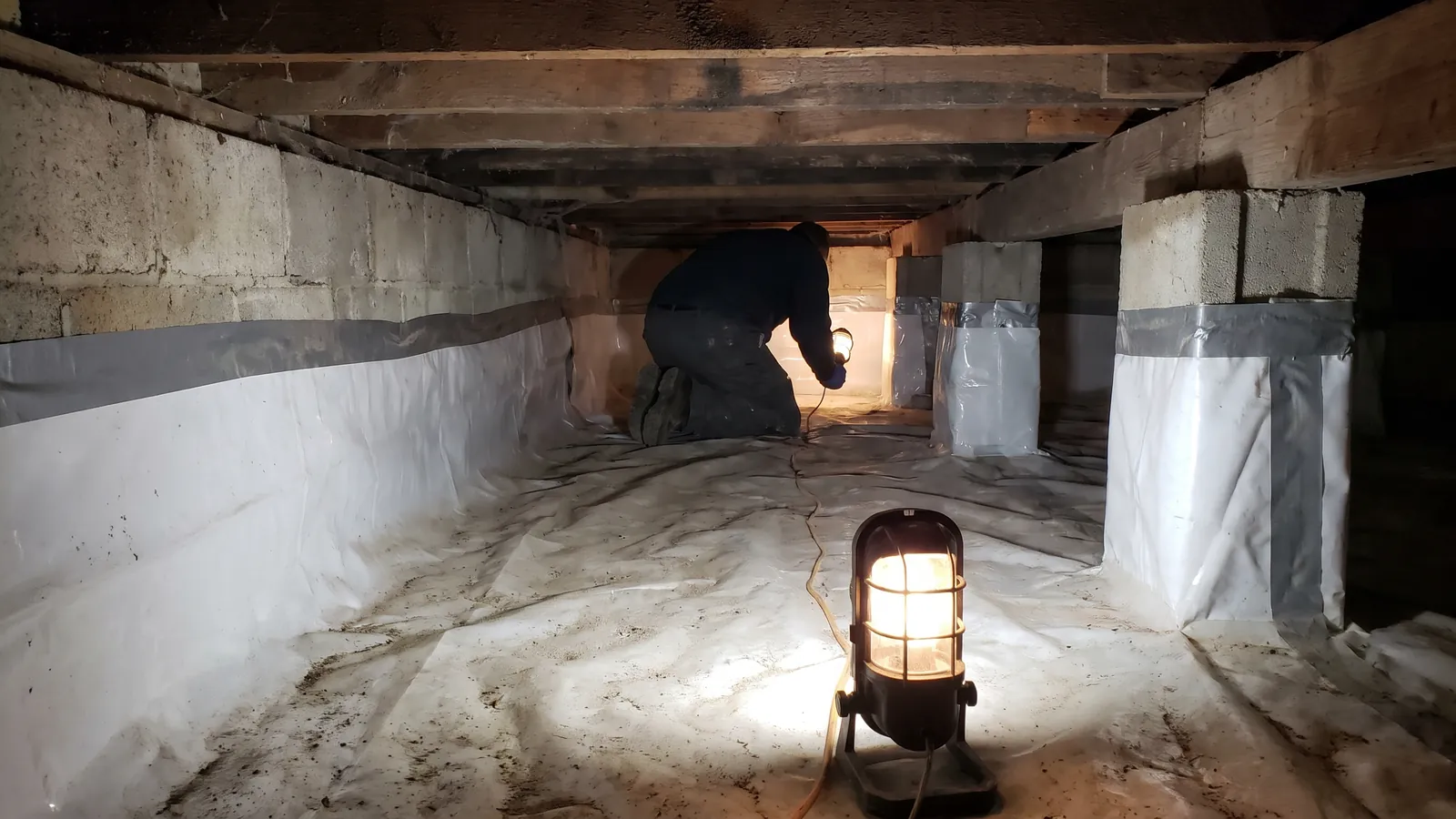
What goes wrong down there
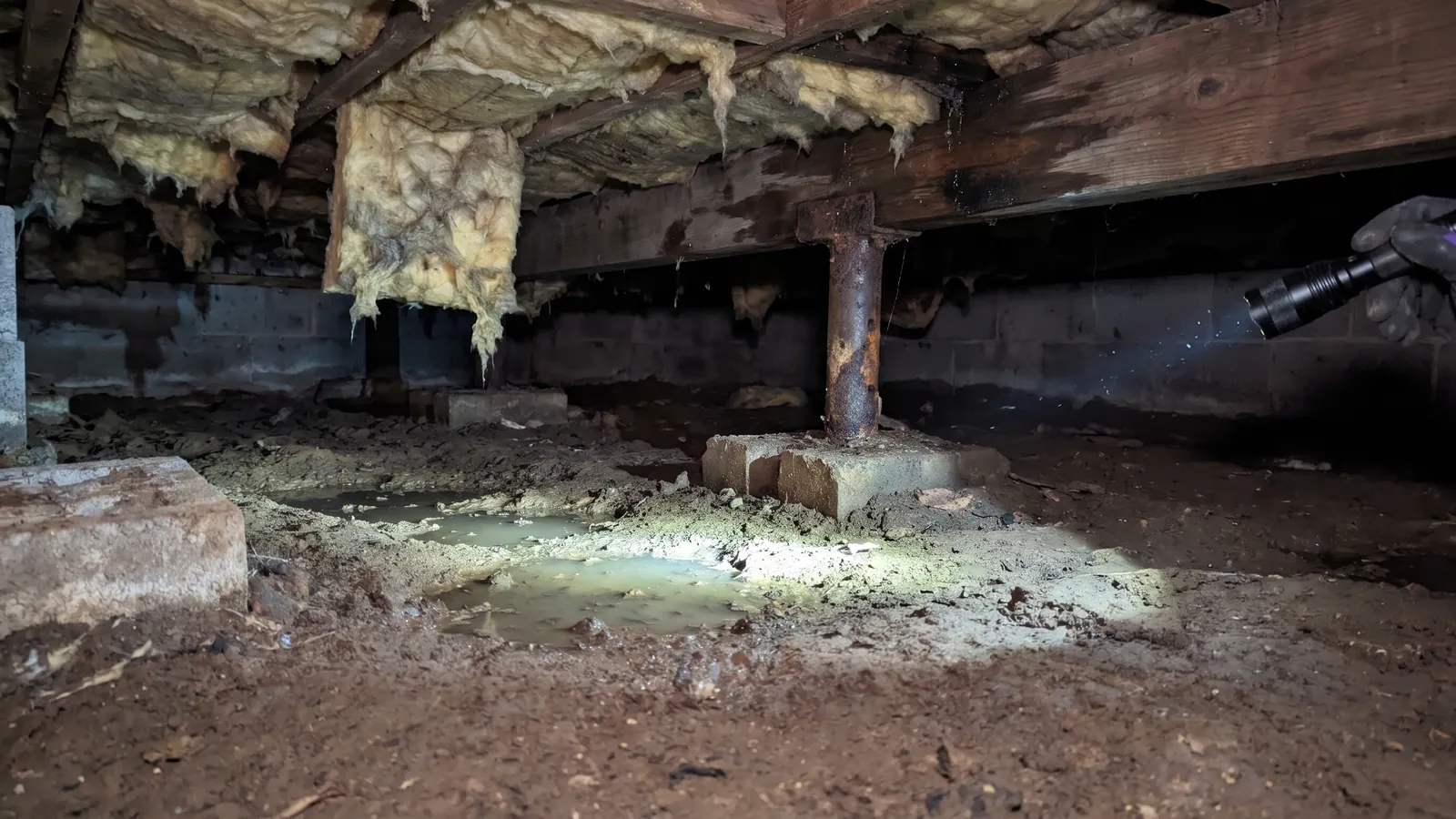
Bare soil gives off water vapor all year. In a humid Missouri summer, outside air coming through the vents adds more. That moisture settles on the cool joists and ductwork. Over time you get mold on the wood, insulation hanging loose, rusted metal and soft spots in the floor above.
The repair, in pieces
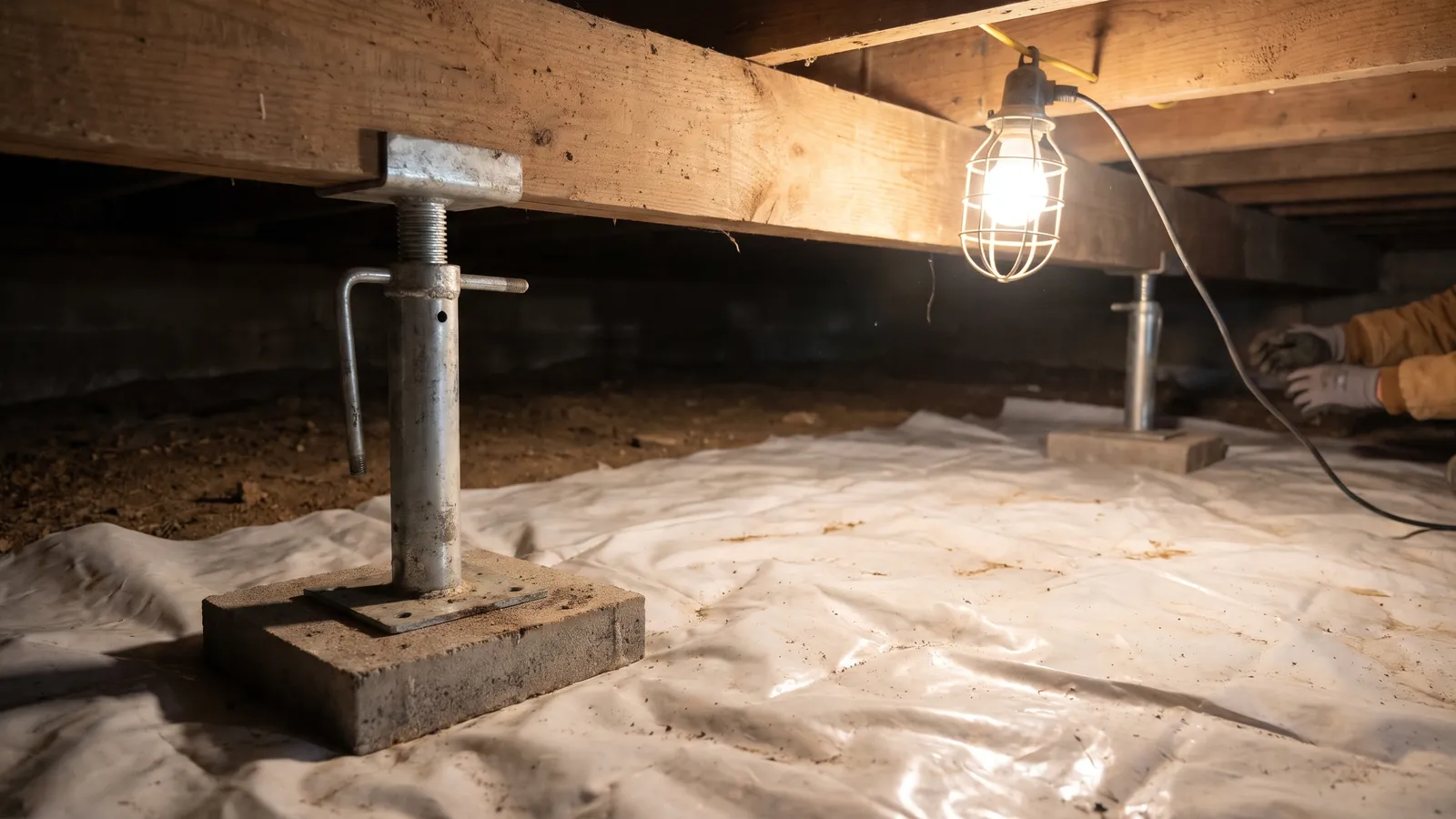
Liner and encapsulation. A heavy plastic liner goes over the ground and up the walls, seams taped, piers wrapped. Fully sealed spaces have the vents closed and the air dried with a dehumidifier or conditioned air.
Support. Sagging beams get adjustable steel jacks on solid pads, set closer together than the old posts. A floor that has dropped can be brought up gradually.
Drainage. If water pools in the crawl space after rain, a perimeter drain and a small sump keep it from sitting on the liner.
Cleanup. Fallen insulation and debris come out first, and anything rotten enough to need a carpenter is pointed out in the written plan.
Is your crawl space part of the problem?
Musty smells in the house, cupping hardwood floors, a floor that dips near the middle of a room and condensation on ducts are all signs that the crawl space is wetter than it should be. The free inspection includes the crawl space, so bring the flashlight-shy part of the house into the conversation.
Questions we hear about crawl space repair
Does every crawl space need full encapsulation?
No. Some need only a ground liner and better drainage. Full encapsulation makes sense when humidity is high and the space connects to living areas through ducts.
Will a liner fix a sagging floor?
No. A liner stops moisture; sagging needs new supports. Many jobs need both.
Can you work in a very low crawl space?
Usually. We look at the clearance at the inspection and plan around it.