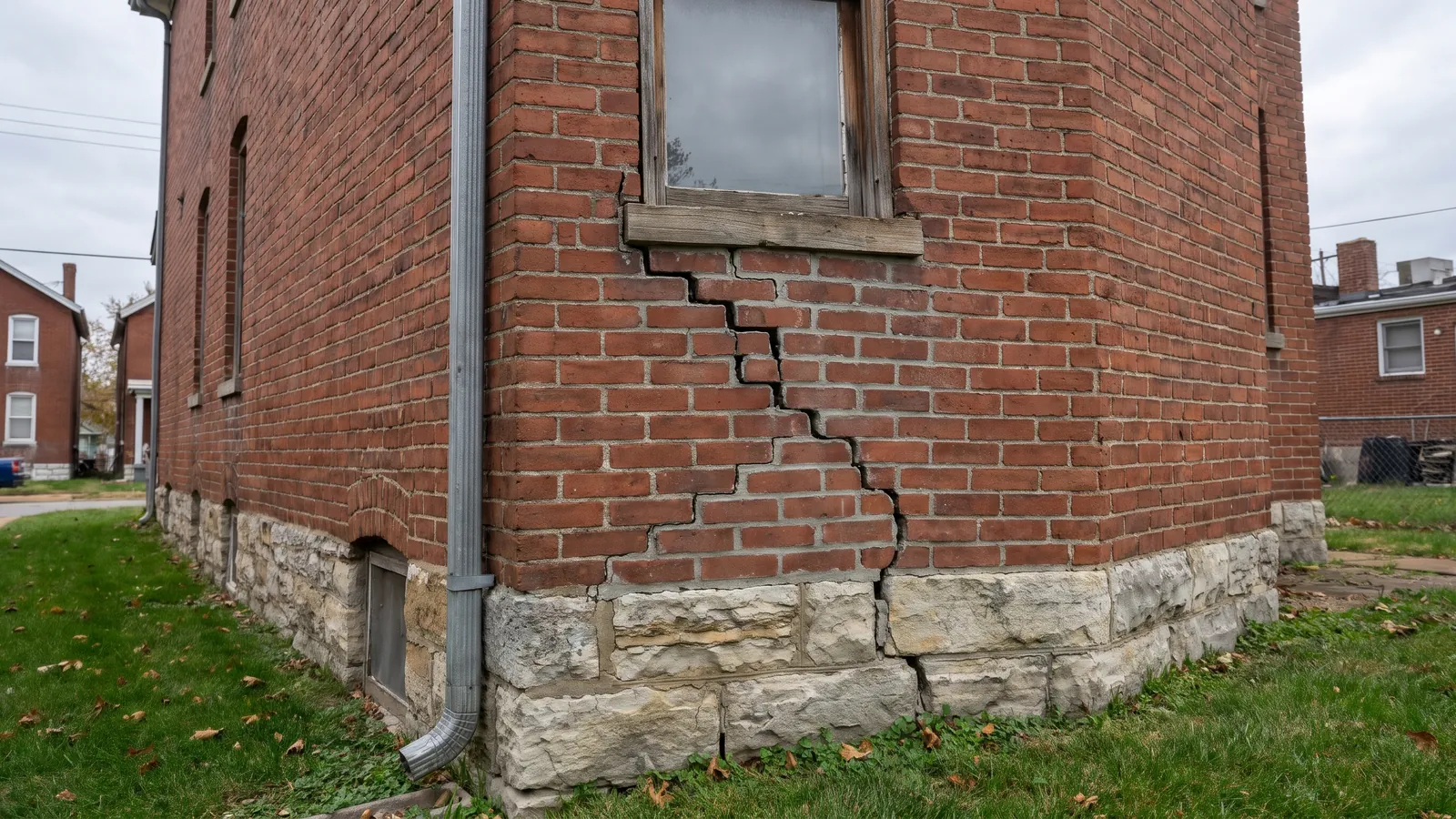
Why St. Louis foundations settle
Much of the ground across the city and county is clay that takes on water and swells, then gives it up and shrinks. A footing sitting in that layer rides up and down with it. When one side of a house dries faster than the rest, under a big tree, at a corner where the downspout dumps water elsewhere, or along a south wall baked by the sun, that side drops a little more each year.
Older houses add their own reasons. Many south city and inner-suburb homes stand on rubble or cut limestone walls laid without the deep footings used today. Newer homes in West County and St. Charles County often sit on fill that was placed when the lot was graded, and fill keeps compacting for years.
What the repair usually involves
- Measure. A laser level maps how far each part of the floor sits from level, so the plan shows where the house has dropped and by how much.
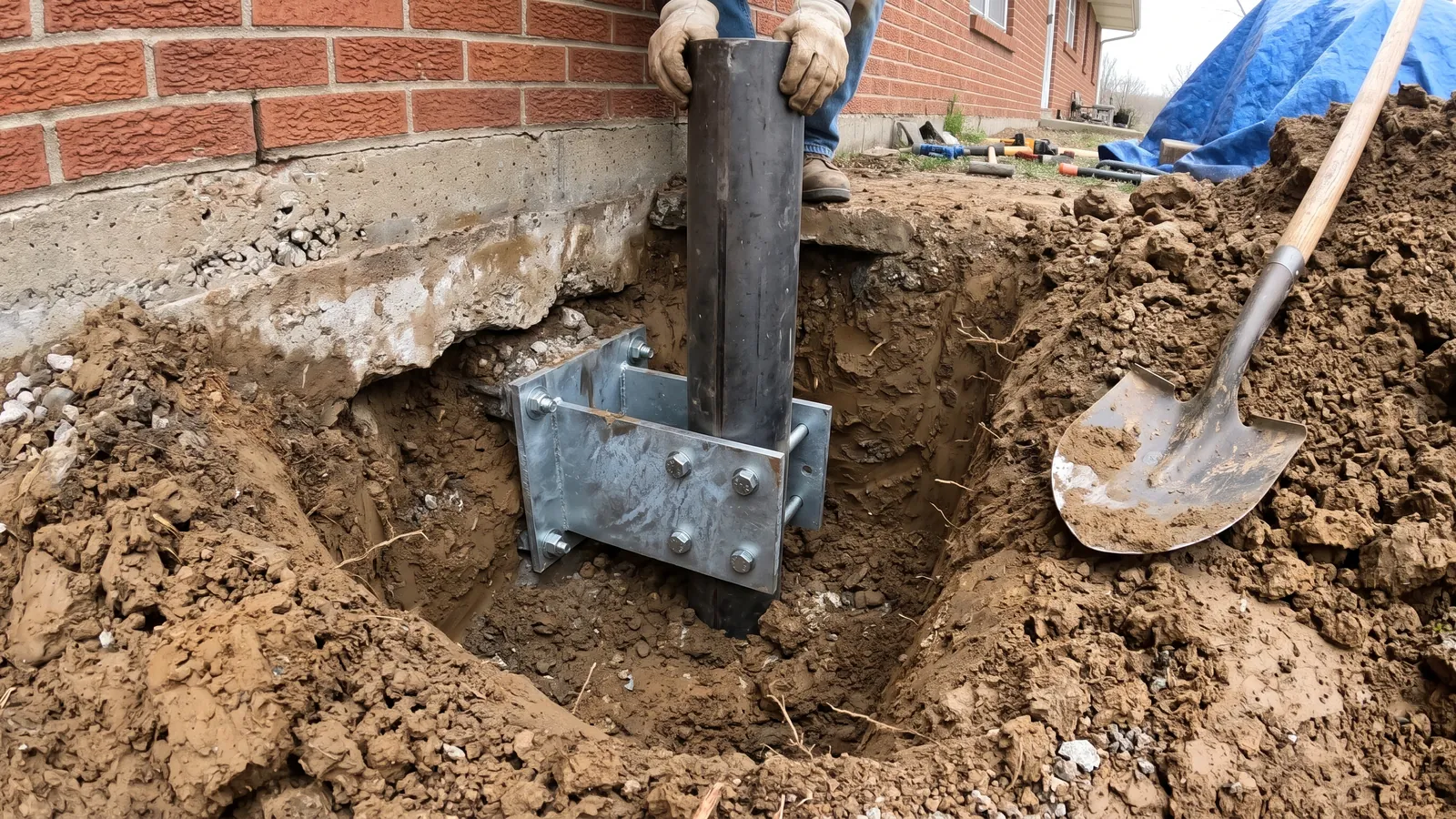
- Choose the pier. Push piers suit heavy brick walls; helical piers suit lighter framing, porches and additions. Some jobs use both.
- Dig and set. Small holes are opened along the settled section, brackets fixed to the footing and piers taken down to firm soil or rock.
- Lift or hold. Where it is safe, the house is raised back toward level. Brick and plaster do not always like moving back, so we tell you before we lift how much is realistic.
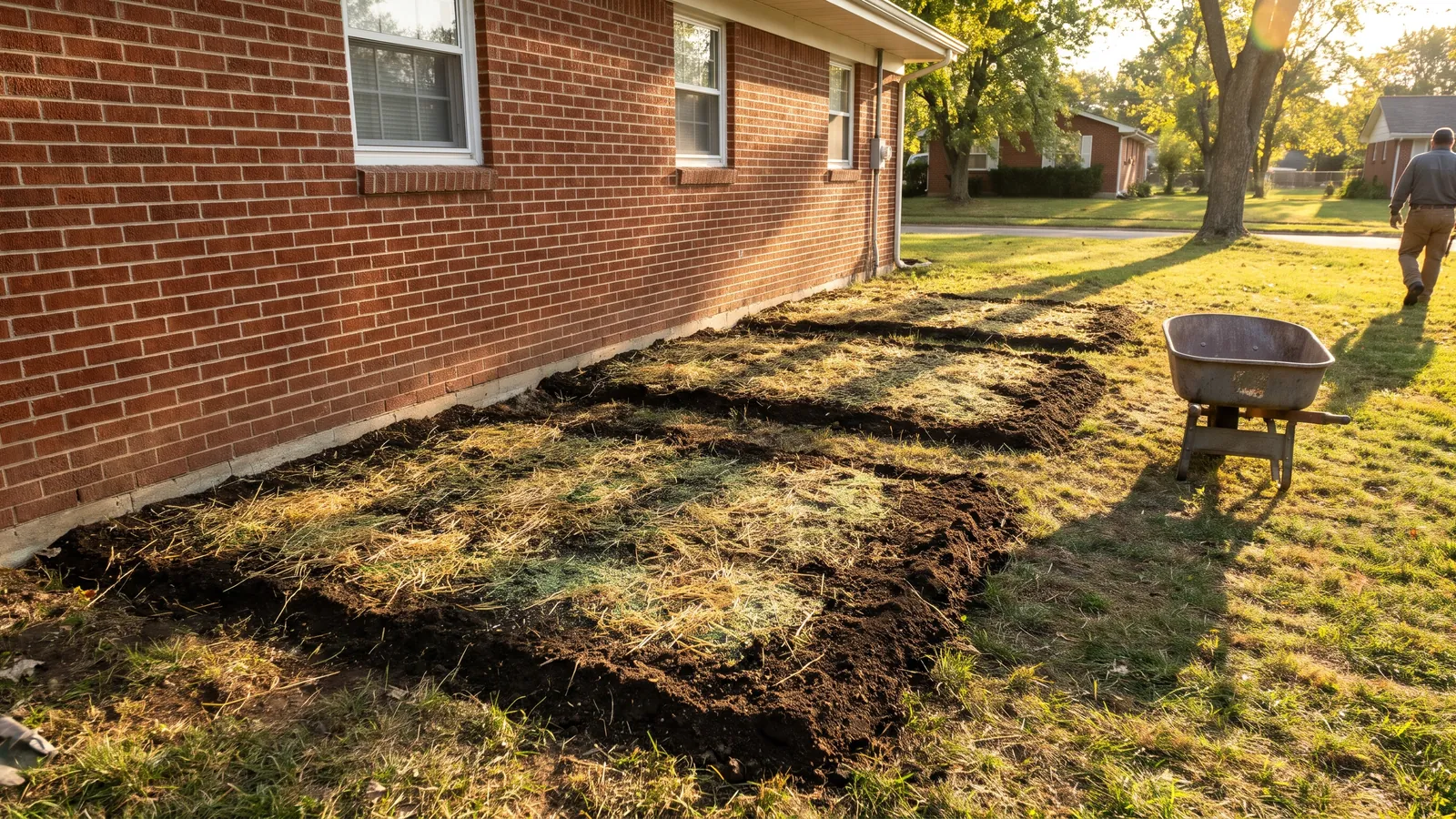
- Close up. The holes are backfilled, the floor measured again and the drainage that started the problem corrected.
Permits and paperwork
Pier work changes how the house is supported, so it is structural work. Inside the City of St. Louis the permit comes from the Building Division; in unincorporated St. Louis County it comes from the county, and many county towns run their own office. We file it, book the inspections and give you a copy of the closed permit for your house records.
Questions we hear about foundation repair
How long does a pier job take?
Most houses take one to three working days once the permit is issued, depending on how many piers the plan calls for and how easy the digging is.
Will the cracks close up after the lift?
Some close, some narrow and some stay. Mortar joints can be repointed and drywall patched afterward; the point of the piers is that the cracks stop growing.
Can you work around landscaping and patios?
Yes. We plan pier spots to miss what we can, lift plants out where needed and replace sod. Concrete that has to be cut is noted in the written price.